What's Robotic Process Automation (RPA)
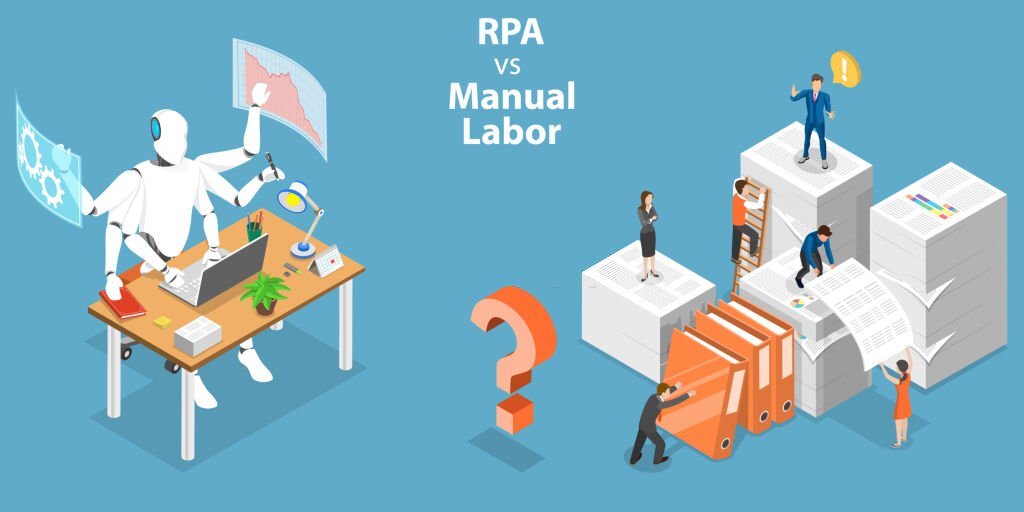
Welcome to the future of work powered by Robotic Process Automation (RPA). RPA uses software robots to automate routine and repetitive tasks like data entry, document processing, and customer service inquiries, freeing up human employees to focus on higher-value work that requires creativity, problem-solving, and critical thinking skills. With RPA, businesses can streamline their processes, reduce costs, and increase productivity, all while maintaining the quality of their services. Embrace the future of work with RPA and let’s build a better tomorrow, together.
What's Robotic Process Automation (RPA)
Welcome to the future of work powered by Robotic Process Automation (RPA). RPA uses software robots to automate routine and repetitive tasks like data entry, document processing, and customer service inquiries, freeing up human employees to focus on higher-value work that requires creativity, problem-solving, and critical thinking skills. With RPA, businesses can streamline their processes, reduce costs, and increase productivity, all while maintaining the quality of their services. Embrace the future of work with RPA and let’s build a better tomorrow, together.



Why Corporates SHOULD adopt RPA in their Ecosystem

Increased efficiency
Increased efficiency

Cost reduction
Cost reduction

Improved accuracy
Improved accuracy

Scalability
Scalability

Increased agility
Increased agility

Faster ROI
Faster ROI
RPA Implementation
Let’s explore the process of implementing RPA in a business, the tools and technologies involved, the importance of proper planning, training, and support, and tips for businesses considering RPA.
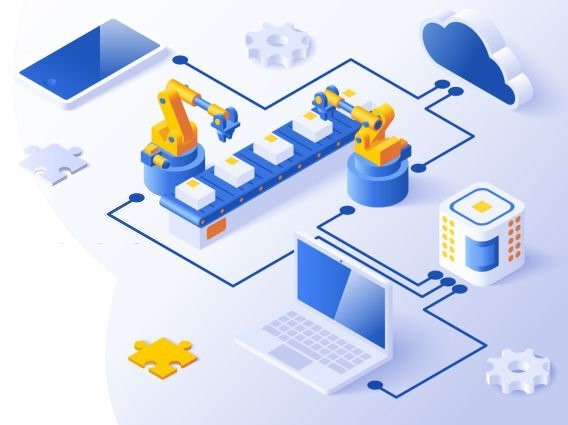
Process mapping software helps to identify and analyze the processes that are suitable for RPA. The software helps to document and visualize the steps involved in a process, enabling the identification of repetitive, rule-based tasks that can be automated using RPA.
RPA software is the core component of RPA implementation. The software helps to automate the identified processes by mimicking human actions. The RPA software can be programmed to perform tasks such as data entry, data extraction, and data analysis.
AI tools can be integrated with RPA software to enhance the automation process. AI tools such as natural language processing, machine learning, and computer vision can help the RPA software to perform tasks that require decision-making, cognitive reasoning, and pattern recognition.
Proper planning, training, and support are critical to ensuring a successful RPA implementation. Before implementing RPA, businesses should conduct a thorough analysis of their processes to identify the tasks that can be automated. They should also define their RPA goals and objectives, create a roadmap, and allocate the necessary resources. Training and support are crucial to ensure that the employees can adapt to the new technology and use it effectively.
- Start with a small pilot project to evaluate the feasibility and benefits of RPA.
- Involve key stakeholders in the decision-making process, including IT, operations, and finance teams.
- Prioritize processes that are high volume, repetitive, and rule-based.
- Conduct a cost-benefit analysis to ensure that the benefits of RPA outweigh the costs.
- Allocate adequate resources for planning, training, and support.
- Continuously monitor and evaluate the RPA implementation to identify areas for improvement.
In conclusion, RPA implementation involves a systematic approach to identify, analyze, and automate business processes using specialized software tools and technologies. Proper planning, training, and support are critical to ensuring a successful RPA implementation. By following the tips mentioned above, businesses can implement RPA effectively and reap the benefits of automation.
RPA Future Trends:
Robotic Process Automation (RPA) is evolving to incorporate Artificial Intelligence (AI) and Machine Learning (ML), leading to more intelligent and autonomous robots capable of automating complex tasks, such as data analysis and decision-making. RPA is likely to continue to grow and evolve, with new applications in customer service, logistics, and supply chain management.
Case Studies
Case Study 1: Deutsche Bank
Deutsche Bank reduced costs and improved efficiency by implementing RPA technology to automate their back-office processes. RPA bots were trained to perform repetitive and manual tasks such as data entry, account reconciliation, and reporting.Deutsche Bank faced a challenge of reducing their operational costs and improving efficiency. They had a high volume of repetitive and manual tasks in their back-office operations, which required a significant amount of time and resources to complete.
To address this issue, Deutsche Bank implemented RPA technology to automate their back-office processes. They worked with a consulting firm to identify the processes that were most suitable for automation and developed a plan to implement RPA bots. The bots were trained to perform the repetitive and manual tasks that were previously done by humans, such as data entry, account reconciliation, and reporting.
Case Study 2: Walmart
Walmart addressed their inventory management challenge by implementing RPA technology. RPA bots monitored inventory levels, identified low-stock items, and generated purchase orders, resulting in a 30% reduction in out-of-stock items, increased customer satisfaction and sales. RPA also allowed Walmart to reduce their inventory holding costs by 20%, leading to significant cost savings.Walmart implemented RPA technology to automate their inventory management processes. They used RPA bots to monitor inventory levels, identify items that were low in stock, and generate purchase orders to replenish inventory.
Walmart implemented RPA technology to automate their inventory management processes. They used RPA bots to monitor inventory levels, identify items that were low in stock, and generate purchase orders to replenish inventory.
With the help of RPA, Walmart was able to achieve significant improvements in their inventory management. The company reported a 30% reduction in out-of-stock items, which resulted in increased customer satisfaction and sales. Additionally, the use of RPA allowed Walmart to reduce their inventory holding costs by 20%, which translated into significant cost savings.
Case Study 3: AT&T
AT&T addressed their customer service challenge by implementing RPA technology to automate routine inquiries. RPA bots understood customer requests and responded with the appropriate information, resulting in a 50% reduction in inquiry handling time and a 20% improvement in customer satisfaction. AT&T also redeployed customer service reps to handle complex inquiries, improving service quality for customers.AT&T, a telecommunications company, faced a challenge of managing their customer service operations efficiently. With millions of customers and thousands of customer service representatives, AT&T needed to ensure that their customer service operations were optimized to handle a high volume of customer inquiries while maintaining a high level of service quality.
AT&T implemented RPA technology to automate their customer service operations. They used RPA bots to handle routine customer inquiries, such as password resets and account inquiries. The bots were trained to understand customer requests and respond with the appropriate information.
With the help of RPA, AT&T was able to achieve significant improvements in their customer service operations. The company reported a 50% reduction in the time it took to handle routine customer inquiries, which resulted in a 20% improvement in customer satisfaction. Additionally, the use of RPA allowed AT&T to redeploy customer service representatives to handle more complex inquiries, which improved the quality of service for customers.
Why Choose Cey Cap Solutions
as Your RPA Solutions Provider
We understand that running a business is not easy, especially when you’re dealing with additional burdens. That’s why we’re here to offer our support and expertise. We want to help you focus on what you’re good at, while we take care of the rest. We are passionate about providing top-notch support to our clients and are all set to go whenever you are ready.
At Cey Cap Solutions, we know that data is the lifeblood of your business. That’s why we provide solutions that are designed to help you gain valuable insights into your operations. With our advanced RPA solutions, we can automate your processes and provide you with the data you need to make informed decisions that can drive your business forward.
So, whether you’re looking to increase your efficiency, reduce your costs, or improve your bottom line, we’ve got you covered. Contact us today to learn more about our RPA solutions and how we can help take your business to the next level. Let’s work together to make your business a success!
Why wait, Get In Touch with us.
Unleashing the Future of Development:
Discover Our Revolutionary Solutions
We enable businesses to revolutionize their operations with cutting-edge technology. Our expert services and access to the latest digital trends help you stay competitive in today’s rapidly evolving market. With our solutions, you can fast-track your software development projects and accelerate your digital transformation journey.

Read more . . .
What Happens Next?
Our sales manager will contact you within a few days of analyzing your business requirements.
In the meantime, we will ask you to sign a non-disclosure agreement (NDA) to ensure the highest level of privacy.
Our pre-sale manager will present you with project estimates and an approximate timeline.